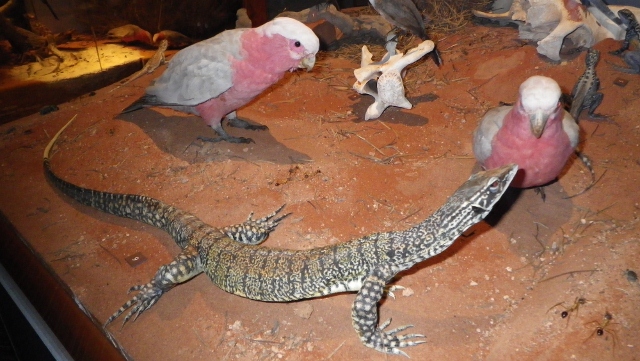
The Boonorong Reserve is a park to help protect and rehabilitate animals that have been injured or orphaned, and in the case of the Tasmanian Devil they have developed an extensive habitate area. The Devil is facing possible extinction due to an incurable cancer (and unfortunately- road kill). Some of the animals we encountered were the Tasmanian Devil, kangaroos, wombat, koala, and rainbow lorakeets.
Tuesday, October 25, 2011
Mt. Field Natl Park/Salamanca Market
Two thirds of Tasmania is World Heritage National Parks and the world's largest remaining temperate rainforest. The easiest park to reach was Mt. Field Natl Park within the heritage site and here is a picture of Horseshoe Falls.
On the way to the Park, we passed the "Salmon Ponds". This is the first hatchery in the southern hemisphere, being established and continually in service since 1864. While initially designed for salmon, it was quickly converted to the more suitable trout. The grounds are manicured like an english garden. Here, Cyndy is feeding the fish. We should have stayed an extra day, as the trout fishing here is said to be excellent.
The Saturday Market (Salamanca) in Hobart is very popular and perhaps famous with its street performers, delicious and novel foods as well as local craftsman. One of the best aboriginal artists that we had seen was here ($). Note the Georgian architecture in the market picture. Hobart was established in the early 1800s.
We stayed at The Lodge on Elizabeth Street built during the 1830s and had been a local mansion with a wash house located in the back garden. The wash house was converted to a guest cottage and made a cozy place for us to stay during our visit in Hobart.
Thursday, October 20, 2011
Hastings Cave - Cygnet
We toured through the Hasting Caves formed from dolomite instead of the usual limestone. They exceeded our expectations and were spectacular!
We finally sited a LIVE Wallaby, they certainly weren't concerned about the local tourists. And then one of the few remaining trees left from logging during the early 1900s.
The evening was still early and our hostess being aware of our interest in rocks and fossils sent us out to Poverty Bay to go for a bit of a look. The shoreline was covered with fossilized sealife.
The Cynet Hotel was nice and friendly. And we had delicious hot hazelnut and orange cake with very heavy creme.
Wednesday, October 19, 2011
Day 18 and 19 Tasmania
Whereas the continent of Australia is hot and dry, this southern island is cool and green, lots of forests and lakes. We visited Port Arthur, where in the 1800s, many of the prisoners were transported from the British Empire (after they couldn’t send them to America anymore after the revolution). It was an inescapable place, where the prisoners used the local large timbers (300 feet high and 5 foot diameter) to make ships.
Pirates Cove

Pirates Cove

Adventure Bay, where the old ships would resupply.
Walking through the fern laden rainforest under the 250 foot canopy.
Monday, October 17, 2011
Day 15 Adelaide
Adelaide is about the size of Salt Lake. Instead of trying to see and do a lot, we set our eyes on one venue, the South Australia Museum. This museum is about 150 years old; and unlike most modern museums, the exhibits in this museum are full and complex. It reminded me most of Carnegie Museum as a child before they modernized it (though it is quite a bit smaller).
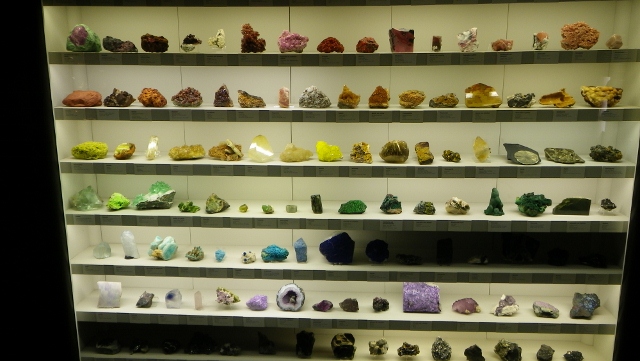
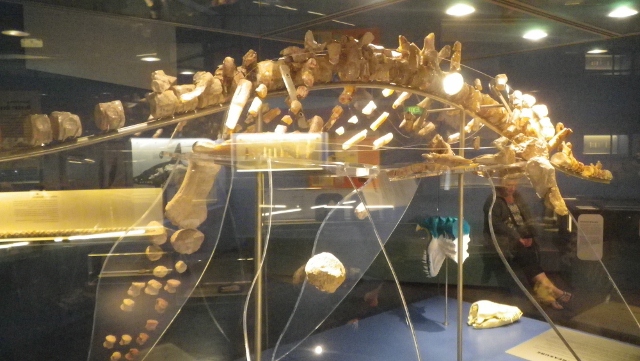
The most intriguing exhibit halls are the two floors of aboriginal life, the large hall of Polynesian Culture (the largest collection of Pacific Island artifacts in the world), a respectable geology collection , the opening of Antarctica (It’s geology is closely related to that of Australia) , a small but decent Egypt room and the National Opal Fossil Collection. We’ll let the pictures do the talking.
Halfway through our walkabout, we are returning from The Red Center back to Adelaide. It is a 16 hour drive, so we took two days to do it. Lots of time to just watch the outback and talk. Here are a few pictures – a salt flat (lots of those), some forest (looks very similar to out pinyon/juniper), a lot of featureless plains (except notice the emus running away in this one).
When crossing the aboriginal reservation, we stopped in the small town of Mintabe (say meant to be). About 30 years ago, this was the big opal producer, 3000 folks, but now there are only 300, about a dozen are mining. But it is here, in the sands of an old miners camp, that we noodled up our nicest finds (of those we actually found on the trip)
We stopped by in Coober Pedy again for the night. We stayed at the same nice underground motel. It was very nice. We would like to bring our kids and grandkids here someday.
On the way back to Adelaide, as we got into wheat country and close to the sea, we stopped at Port Germaine for dinner. All of this small town is old, and very much as sleepy little town. Of note , there is a mile long jetty (pier) extending out into the tidal basin, and a cool old lighthouse. From 1881, until the railroad came in 1934, this was the major wheat shipping port. Every day, tall sailing ships would dock and take on sacks of wheat to feed the British Empire, loading 100,000 sacks a year from this dock.
Friday, October 14, 2011
Day 12 Sunrise/Sunset
Uluru,. The Red Center, Ayer’s Rock, the Big Rock in the Desert. Whatever you want to call it, it is MASSIVE.. Both the sunrise nd sunset are well worth the trip. Indeed, it is a lot like home, but with its own spirit. Below are the sunrise and the sunset views.
Our walkabout is now halfway over, but the walk around the rock makes it feel complete.
This place has been the temple of the locals for thousands of years. There are life sustaining springs and caves at the base. Certain sections cannot be photographed. Those below could be.
We walked around the whole rock, about seven miles, plus three more at KataTjuta,and ended the day with an impressive susnset.
Close by at Kata Tjuta (the Olgas), another set of monoliths about 30 miles to the west. They are also not to be missed.
Our walkabout is now halfway over, but the walk around the rock makes it feel complete.
Subscribe to:
Posts (Atom)